
Trinity® MRI/US Fusion
KOELIS Trinity® Coding & Reimbursement Hub
How to use this page
- Start here (Overview): quick orientation and key context.
- Physician Coding tab: CPT/ICD-10 selection logic, modifiers, and common pitfalls.
- Facility Coding tab: site-of-service considerations, documentation checklist, and charge capture tips.
- Right-side “Additional Resources”: KOELIS content and supporting references.
What Trinity® is (concise)
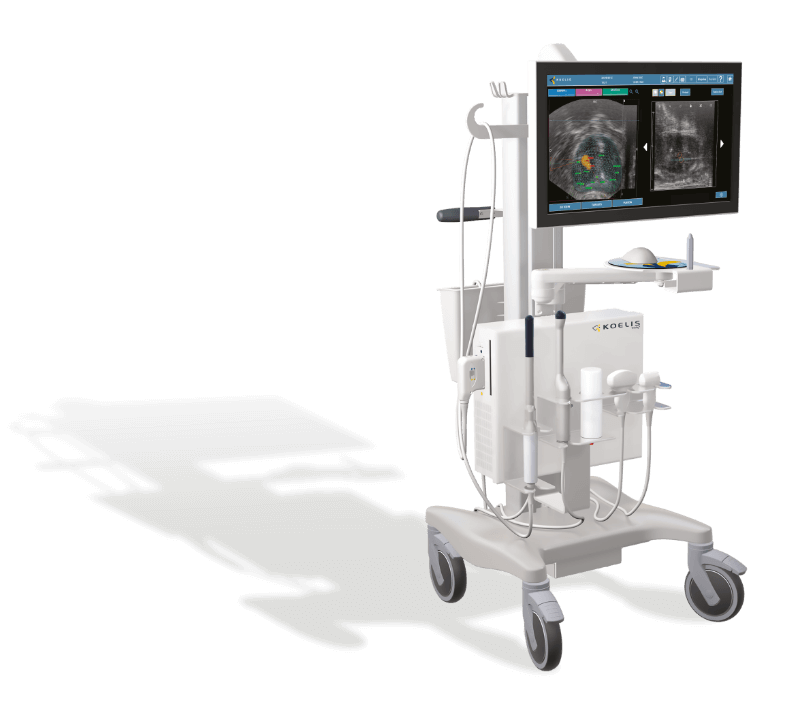
KOELIS Trinity® is a compact, mobile MRI–ultrasound fusion biopsy platform with an integrated ultrasound system, designed to support transperineal or transrectal workflows. It uses real-time 3D technologies and KOELIS’ tracking/fusion approach to help maintain targeting accuracy despite patient movement and prostate deformation.
Tools to help you (fast)
- PRS CodeMatrix Trinity® ROI calculator: use this to estimate financial impact and support internal ROI conversations.
Transparency
- Thank you to KOELIS for supporting this hub and the development of the tools.
- This information is developed and vetted by PRS and is not influenced by KOELIS.
Physician Coding
2026 prostate biopsy coding is driven by approach (transrectal vs transperineal), guidance (ultrasound only vs fusion vs in-bore), and targeting strategy (systematic, targeted only, or systematic + targeted). Targets—not cores—drive selection.
How to choose: Select codes based on approach (transrectal vs transperineal), guidance (ultrasound only vs fusion vs in-bore), and whether biopsy is systematic, targeted only, or systematic + targeted. The number of cores does not determine code selection.
Transrectal Approach
- 55707 – Biopsy, prostate, transrectal, ultrasound-guided (ie, sextant, ultrasound-localized discrete lesion[s])
- 55708 – Biopsy, prostate, transrectal, ultrasound-guided (ie, sextant) with MRI-fusion-guidance, first targeted lesion
- 55711 – Biopsy, prostate, transrectal, MRI–ultrasound-fusion guided, targeted lesion(s) only, first targeted lesion
Transperineal Approach
- 55709 – Biopsy, prostate, transperineal, ultrasound-guided (ie, sextant, ultrasound-localized discrete lesion[s])
- 55710 – Biopsy, prostate, transperineal, ultrasound-guided (ie, sextant) with MRI-fusion-guidance biopsy, first targeted lesion
- 55712 – Biopsy, prostate, transperineal, MRI–ultrasound-fusion guided, targeted lesion(s) only, first targeted lesion
In-Bore CT or MRI–Guided Biopsy
- 55713 – Biopsy, prostate, in-bore CT- or MRI-guided (ie, sextant), with biopsy of additional targeted lesion(s), first targeted lesion
- 55714 – Biopsy, prostate, in-bore CT- or MRI-guided targeted lesion(s) only, first targeted lesion
Add-On Code (Additional Targeted Lesions)
- 55715 – Each additional, MRI–ultrasound fusion or in-bore CT- or MRI-guided targeted lesion (List separately in addition to code for primary procedure)
Tip: Bill 55715 per additional targeted lesion (units reflect additional lesions), not per core.
Pair diagnosis codes with a clear indication in the documentation (e.g., elevated PSA, abnormal MRI, active surveillance).
- C61 – Malignant neoplasm of prostate
- N40.2 – Nodular prostate without lower urinary tract symptoms
- N40.3 – Nodular prostate with lower urinary tract symptoms
- R97.20 – Elevated PSA, unspecified
- R97.21 – Rising PSA following treatment for malignant neoplasm of prostate
- R93.89 – Abnormal findings on diagnostic imaging of other specified body structures
- Z85.46 – Personal history of malignant neoplasm of prostate
Modifier Use
- Modifier -22 may be appropriate when the procedure requires significantly more effort than usual (e.g., multiple difficult targets, complex anatomy, extended operative time). Support with specific detail in the op note.
- Modifier -52 may be considered in payer-specific scenarios when the service performed does not fully meet descriptor requirements (e.g., certain low-field MRI systems). Support with clear documentation and payer guidance when available.
Example of Modifier -22 in Practice
Scenario: MRI-Fusion Transperineal Biopsy with Multiple Targets
- Standard procedure: Systematic biopsy using ultrasound guidance.
- Enhanced procedure: MRI–ultrasound fusion targeting of multiple suspicious lesions in addition to systematic sampling, requiring additional planning, fusion work, repeated needle repositioning, and extended operative time.
- Documentation: “The procedure required 2 times the operative time due to MRI–ultrasound fusion targeting of multiple suspicious lesions, transperineal access, and repeated needle repositioning to ensure accurate sampling of all regions of concern.”
Global Period Awareness
- The 2026 prostate biopsy CPT codes (55707–55714) carry a 0-day global.
- CPT 55715 is an add-on (ZZZ) code and follows the global period of the primary procedure.
2026 Key Takeaways
- Cores do not drive coding — targets do.
- Approach + guidance + targeting determine CPT selection.
- MRI fusion requires true fusion technology (not cognitive targeting).
- 55715 units represent additional targeted lesions (not additional cores).
Facility Coding
Facility claims should support the same 2026 biopsy framework used for physician coding: approach, guidance, and targeting strategy. Payment and packaging rules vary by payer and site of service (Office/Clinic, ASC, HOPD). Clear documentation and clean charge capture reduce denials—especially for fusion and in-bore workflows.
How to choose: Select codes based on approach (transrectal vs transperineal), guidance (ultrasound only vs fusion vs in-bore), and whether biopsy is systematic, targeted only, or systematic + targeted. The number of cores does not determine code selection.
Transrectal Approach
- 55707 – Biopsy, prostate, transrectal, ultrasound-guided (ie, sextant, ultrasound-localized discrete lesion[s])
- 55708 – Biopsy, prostate, transrectal, ultrasound-guided (ie, sextant) with MRI-fusion-guidance, first targeted lesion
- 55711 – Biopsy, prostate, transrectal, MRI–ultrasound-fusion guided, targeted lesion(s) only, first targeted lesion
Transperineal Approach
- 55709 – Biopsy, prostate, transperineal, ultrasound-guided (ie, sextant, ultrasound-localized discrete lesion[s])
- 55710 – Biopsy, prostate, transperineal, ultrasound-guided (ie, sextant) with MRI-fusion-guidance biopsy, first targeted lesion
- 55712 – Biopsy, prostate, transperineal, MRI–ultrasound-fusion guided, targeted lesion(s) only, first targeted lesion
In-Bore CT or MRI–Guided Biopsy
- 55713 – Biopsy, prostate, in-bore CT- or MRI-guided (ie, sextant), with biopsy of additional targeted lesion(s), first targeted lesion
- 55714 – Biopsy, prostate, in-bore CT- or MRI-guided targeted lesion(s) only, first targeted lesion
Add-On Code (Additional Targeted Lesions)
- 55715 – Each additional, MRI–ultrasound fusion or in-bore CT- or MRI-guided targeted lesion (List separately in addition to code for primary procedure)
Tip: Bill 55715 per additional targeted lesion (units reflect additional lesions), not per core.
Site of Service: What Drives Facility Payment
Facility reimbursement is often most sensitive to where the procedure occurred and what resources were required:
- Office/Clinic: May be billed under professional/clinic billing rules; supplies and imaging resources are often captured differently than outpatient departments.
- ASC: Payment is typically procedure-based; confirm payer policy for MRI-fusion and transperineal workflows, especially when specialized equipment is used.
- HOPD (Outpatient Hospital): Payment may be influenced by packaging rules and departmental charging; in-bore imaging workflows typically have higher facility resource use.
Practical takeaway: For consistent reimbursement, the facility record should clearly support (1) approach, (2) guidance modality, and (3) targeted lesion count.
Charge Capture Tips: Common Misses That Trigger Denials
- Targets vs cores confusion: Facility documentation frequently lists “12 cores” but fails to state “2 targeted lesions.” For 2026, lesion count matters; core count does not drive CPT selection.
- Fusion not supported: If fusion is billed but documentation reads like cognitive targeting, expect denial. Make sure the record supports a fusion platform/workstation workflow.
- In-bore ambiguity: In-bore guidance should be clearly reflected in radiology/facility documentation. If the record is vague, payers may dispute the resource level.
- Units for additional targeted lesions: When additional targeted lesions are performed, facility documentation should clearly support the number of additional lesions (not additional samples).
- Site-of-service mismatch: Ensure the correct place-of-service and departmental indicators are used (ASC vs HOPD vs clinic), as payer rules differ.
Bottom line: Clean claims start with clean clinical language. “Fusion used” and “two targeted lesions biopsied” are the phrases that prevent friction.
Facility diagnosis reporting should align with the documented indication for the biopsy episode and match the physician claim where appropriate.
- C61 – Malignant neoplasm of prostate
- N40.2 – Nodular prostate without lower urinary tract symptoms
- N40.3 – Nodular prostate with lower urinary tract symptoms
- R97.20 – Elevated PSA, unspecified
- R97.21 – Rising PSA following treatment for malignant neoplasm of prostate
- R93.89 – Abnormal findings on diagnostic imaging of other specified body structures
- Z85.46 – Personal history of malignant neoplasm of prostate
To reduce denials and miscoding, ensure the following elements are captured in the facility record (op note + nursing/tech documentation + device logs as applicable):
- Approach: Transrectal vs transperineal (explicit language).
- Guidance modality: Ultrasound only vs MRI–ultrasound fusion vs in-bore CT/MRI.
- Targeting strategy: Systematic only vs targeted only vs systematic + targeted.
- Targeted lesion count: Number of distinct targeted lesions (supports add-on unit logic where applicable).
- Fusion technology evidence (if used): Note that fusion was performed using a fusion platform/workstation (not cognitive targeting).
- In-bore evidence (if used): Imaging performed during the procedure with in-bore CT/MRI guidance (include departmental documentation and timestamps when available).
- Anesthesia record: Type of anesthesia, start/stop times, and staffing per facility protocol.
- Specimen handling chain: Labeling, number of specimen containers, and transport documentation (helps prevent downstream pathology disputes).
Why this matters: The facility claim should tell the same story as the physician claim. When they conflict (e.g., fusion implied in one record but not the other), payers often default to denial or downcoding.
Coverage & Policy Notes (Fusion, In-Bore, and New Technology)
Facility billing is frequently affected by payer policy interpretations—especially during the first year of new codes.
- MRI–ultrasound fusion: Many payers expect documentation that fusion was performed using a fusion platform/workstation (not cognitive targeting).
- In-bore CT/MRI guidance: The code descriptors include “in-bore.” If a facility uses alternative MRI configurations (e.g., low-field/portable systems), confirm payer interpretation and consider internal compliance review before broad rollout.
- Pre-authorization: Some payers may require prior auth for MRI-guided biopsy pathways. When required, ensure the authorization record matches the performed guidance approach.
- Record alignment: The physician op note, facility record, and any radiology documentation should all support the same approach/guidance story.
Recommendation: During early adoption, track denials by payer and maintain a short internal “payer rules” addendum so scheduling, authorization, and coding teams stay aligned.
Global Period Awareness (Facility Perspective)
- The 2026 prostate biopsy CPT codes are structured with a 0-day global, which reduces confusion about bundled post-op facility visits related to the biopsy procedure itself.
- Standard post-procedure monitoring/recovery is part of the facility workflow, but separate billable services must meet payer and setting requirements.
Key point: The global period doesn’t replace payer coverage rules—documentation still determines whether services are payable.