
HOOVER FANS Ureteral Access Sheath
Dornier HOOVER FANS Coding & Reimbursement Hub (HOOVER FANS)
How to use this page
- Start here (Overview): quick orientation + what this hub is designed to help you do.
- Physician Coding tab: professional coding logic + documentation tips for cases using HOOVER FANS.
- Facility Coding tab: facility reporting + charge capture tips for cases using HOOVER FANS (payer rules vary).
- Quick reference: use the PRS CodeMatrix© link for a fast "at-a-glance" guide.
- Right-side "Additional Resources": Dornier product + reimbursement resources and clinical summaries.
What HOOVER FANS is (very briefly)
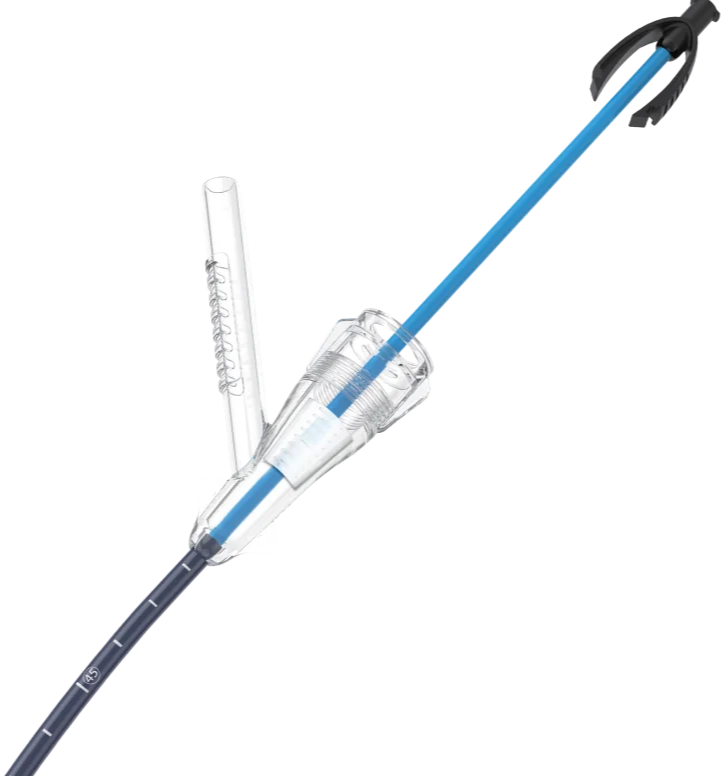
Dornier HOOVER FANS Ureteral Access Sheath is a flexible and navigable suction ureteral access sheath (FANS-UAS) designed to help reduce intrarenal pressure, improve vision, and remove stone fragments and dust during ureteroscopy workflows.
Q4 2026 status (effective October 1, 2026): no Medicare coding or payment changes from Q3 — the July 1, 2026 updates below remain current
- New facility code C8014: CMS established C8014 for ureteroscopic lithotripsy performed with a suction-enabled ureteral access sheath — the code that now describes HOOVER FANS cases performed with a standard ureteroscope.
- C9761 remains in APC 5376: C9761 applies when a suction-integrated ureteroscope or steerable ureteral catheter (e.g., Dornier Axis II Clerix) is used — including when used together with HOOVER FANS.
- One or the other, never both: C8014 and C9761 cannot be reported together on the same claim. See the Facility Coding tab for the full decision logic.
- Physician reporting is unchanged: continue with 52353 / 52356; the additional aspiration work may be supported with modifier -22 or unlisted CPT 53899 where documented.
Thank you & transparency
- Thank you to Dornier for supporting this hub and the development of the tools.
- This content is developed and vetted by PRS and is not influenced by Dornier.
- Always confirm payer-specific requirements and current-year rules before go-live changes.
Physician Coding (HOOVER FANS)
Professional reporting for cases using HOOVER FANS generally follows standard ureteroscopy and lithotripsy CPT® rules. Your success hinges on clear documentation so the claim supports the work performed and aligns with the facility record.
General concept: Choose CPT based on what you did (ureteroscopy/pyeloscopy, lithotripsy, stent, etc.).
Common ureteroscopy/lithotripsy codes (examples)
- 52353 – Ureteroscopy with ureteral/renal pelvic lithotripsy
- 52356 – Ureteroscopy with lithotripsy and indwelling ureteral stent insertion
Q4 2026: reporting the additional suction/aspiration work
- Physician reporting is unchanged: the new facility codes (C8014, C9761) are HOPD/ASC codes and do not apply to physician claims. Physicians continue to report 52353 or 52356.
- For the additional work associated with suction/steerable vacuum aspiration, providers may report either the unlisted procedure CPT 53899 (By Report) or append modifier -22 to 52353 / 52356 to indicate that the work performed was greater than typically required.
- Box 19: add a short description of the extra work performed to Box 19 of the claim to assist in proper processing by the payer.
- Be prepared to provide clinical documentation if requested by the payer.
Medicare national average payment (2026 MPFS): 52353 approx. $344; 52356 approx. $365. Actual payment varies by geography and payer.
Documentation language that helps:
- State lithotripsy performed (laser, etc.).
- Stent usage (placed vs not placed; laterality if relevant).
- Describe stone burden/location and outcome (residual fragments, stone-free intent, etc.).
- Describe aspiration/evacuation workflow (e.g., suction via access sheath system) clearly, scope size and type/make.
- N20.0 – Calculus of kidney
- N20.1 – Calculus of ureter
- N20.2 – Calculus of kidney with calculus of ureter
Documentation should include a clear and accurate clinical description of the procedure performed and the name(s) of the device(s) used.
-
Modifier Use
-
Modifier -59 (-XS) may be required when performing multiple stone procedures.
Note: You may not report codes 52356 and 52353 on the same side with a -59 (-XS) modifier. -
Modifier -22 is used when a procedure requires significantly more effort than usual.
Example of Modifier 22 in Practice
Scenario: Steerable Ureteroscopy with Suction Technology
Standard procedure: Breaking stones with laser, relying on natural clearance.
Enhanced procedure: Using suction to actively remove stone fragments, requiring additional laser work and extended scope manipulation.
Documentation: "The procedure required 2 times the amount of operative time than the normal time to ensure a completely clear the kidney due to the number of stones, the structure of the stones resulting in irregular fracture and the anatomy of the kidney. Additional operative time was required to fully explore and evacuate stone burden, reducing post-op complications and risk of repeat stone formation."
Justification: This extra effort places the procedure in the statistical 'tail' of the standard bell curve, warranting higher reimbursement.
Alternative: the unlisted procedure CPT 53899 (By Report) may be reported instead of appending modifier -22; add a short description of the extra work to Box 19 of the claim.
-
Modifiers -LT and -RT
- Are required when a bilateral organ, such as the kidneys or ureters, is involved and a procedure is performed on only one side.
- Are applied to unilateral procedures to differentiate between treatment on the left and right kidney or ureter.
-
Modifier -50 Bilateral
- Use when identical service is provided on both the right and left during the same encounter.
- Report "1" unit when using modifier -50 per current ANSI standards; fee may be increased to support expected increase in reimbursement.
- Some payers may require alternative reporting including use of 2 lines with RT and LT on separate lines.
- Check with payer for appropriate bilateral reporting.
-
Modifier -59 (-XS) may be required when performing multiple stone procedures.
-
Global Period Awareness
- Most kidney stone procedures have a 0-day global period. (Exceptions are the ESWL and PCNL procedures which have 90-day global periods.)
-
Common Physician-Side Pitfalls
- Underspecifying the work: "URS with suction" without clarifying lithotripsy, renal vs ureteral location, or outcome.
- Stent ambiguity: stent placed but not clearly documented (or vice versa).
- Inconsistent terminology: shorthand in the op note that doesn't map to clean claims language.
- Assuming facility edits don't affect you: facility denials often trigger rebilling cycles and physician AR delays.
Facility Coding (HOOVER FANS)
Q3 2026 Update — New Code C8014 (Effective July 1, 2026)
CMS has established a new HCPCS code that directly describes ureteroscopic lithotripsy performed with a suction-enabled ureteral access sheath — the HOOVER FANS procedure. This replaces the Q2 2026 guidance on this page, which addressed whether C9761 could be reported for HOOVER FANS cases before a specific code existed.
C8014 – Cystourethroscopy, with ureteroscopy and/or pyeloscopy, with lithotripsy, including use of a suction enabled ureteral access sheath, with irrigation (if performed)
C9761 – Cystourethroscopy, with ureteroscopy and/or pyeloscopy, with lithotripsy, and ureteral catheterization for steerable vacuum aspiration of the kidney, collecting system, ureter, bladder, and urethra if necessary, with use of steerable ureteral catheter or suction-integrated ureteroscopeWhich code applies to a HOOVER FANS case?
- HOOVER FANS with a standard ureteroscope (no suction integration): report C8014.
- HOOVER FANS used alongside a suction-integrated ureteroscope or steerable ureteral catheter (e.g., Dornier Axis II Clerix): report C9761 only.
- Never report C8014 and C9761 together on the same claim. Both are status indicator J1 (comprehensive/primary), so Medicare will not pay a second APC; if a suction-integrated scope and a sheath are both used, only C9761 is reported.
- Payers that do not recognize C codes: default to 52353 / 52356.
Payment context (Medicare national averages, Q4 2026)
- C8014 is assigned to APC 5375 (HOPD SI J1) — reimbursed the same as 52353 and 52356: approx. $5,477.93 HOPD. In the ASC, C8014 is payment indicator J8 (device-intensive) at approx. $3,451.70.
- C9761 remains assigned to APC 5376 for Q4 2026 — approx. $9,672 HOPD / $6,612 ASC (device-intensive in the ASC).
- 52353 / 52356 — approx. $5,478 HOPD / $2,730 ASC.
- C1889 – Implantable/insertable device, not otherwise classified — the device C code for the suction-enabled ureteral access sheath (HOOVER FANS). For Medicare HOPD claims, report C1889 for the sheath only when the procedure is C9761 (sheath used alongside a suction-integrated scope). C8014 includes the suction-enabled access sheath — do not report C1889 with C8014 for Medicare. Packaged (ASC PI N / HOPD SI N1).
- C1747 – Endoscope, single-use (i.e. disposable), urinary tract, imaging/illumination device (insertable) — the device C code for a single-use scope. Report C1747 when a single-use scope is used: always when a single-use suction-integrated scope (e.g., Dornier Axis II Clerix) drives a C9761 case, and with C8014 when a steerable single-use scope without suction capabilities is used in conjunction with the sheath (C8014 is device-intensive).
- Medicare — HOPD: report C1747 and/or C1889 (as used; C1889 is not reported with C8014) with your device charge amounts; packaged, paid $0 — but CMS uses this data for future rate calculations, so hospital reporting matters.
- Medicare — ASC: C1747 / C1889 are not required and may in fact cause claim rejections for some MACs and payers. ASC payment is calculated as a percentage of the hospital APC; ASC reporting does not factor into cost allocation.
- Commercial — ASC and HOPD: payer may require C1747 (single-use scope), C1889 (if sheath used), and the use of revenue code 0278 — many plans pay line item on 0278 unless plan policy specifically disallows it. Check with your payer for specific instructions. A commercial payer that recognizes C8014 may still require C1889 for the sheath on a C8014 claim, even though Medicare does not.
*PLEASE NOTE: When the HOOVER FANS suction-enabled ureteral access sheath is used in a C9761 procedure, report the sheath with C1889. In a C8014 procedure the sheath is included in C8014 and C1889 is not reported for Medicare. When a single-use scope is used — e.g., Clerix in a C9761 procedure, or a steerable single-use (non-suction) scope in a C8014 procedure — report the scope with C1747. For Medicare in the HOPD, C1747 and C1889 (descriptions above) are packaged for 2026 — no separate payment is made, but continue to report them with your device charge amounts to support future rate calculations. Medicare does not require these codes in the ASC. Commercial payers may require these device codes and the use of revenue code 0278 in both the ASC and HOPD — check with your payer for specific instructions.
Important Coding and Compliance Context
The reimbursement landscape for suction-assisted stone procedures continues to evolve. For background on the coding history and current status, please see the "Facility Coding" tab of the Kidney Stone Hub Category Page (https://prsnetwork.com/kidneystones) for more information.
PRS Recommends:
- Confirm payer (Medicare/Commercial) recognition of C8014 and C9761 before submitting claims. Make sure the policy or your contract for that payer supports payment of the code you select.
- Document the device name and functional capabilities in the operative note. For C8014, the note should state that a suction-enabled ureteral access sheath (device name) was used; for C9761, that steerable vacuum aspiration was performed using the device name — not merely that "suction was used."
- If the payer does not recognize the C codes, default to 52356 or 52353.
- Report C1747 / C1889 per payer instruction. For HOPD Medicare claims, report device codes with device charges even when packaged, to support future rate-setting (C1889 is not reported with C8014). For ASC Medicare claims, see the device-code caution above.
Please see the Q4 2026 decision guidance above for code selection
- C8014 – HOOVER FANS with a standard (non-suction-integrated) ureteroscope.
- C9761 – suction-integrated ureteroscope or steerable ureteral catheter used (with or without HOOVER FANS); never on the same claim as C8014.
- 52353 / 52356 – payers that do not recognize the C codes.
- C1747 / C1889 – device codes per payer instruction (see device-code guidance above).
ASC and HOPD (outpatient) diagnosis reporting: Report ICD-10-CM diagnosis codes that reflect the
reason for the encounter/surgery and code to the highest level of specificity supported by the medical record
(use all applicable characters; include laterality/associated conditions when available).
In the outpatient setting, the first-listed diagnosis is used in lieu of an inpatient "principal diagnosis."
For outpatient surgery (same-day surgery), code the reason for the surgery as the first-listed diagnosis
even if the procedure is not performed due to a contraindication. If a definitive diagnosis is not established,
do not code "probable/suspected/rule out" conditions—code the signs/symptoms or the condition(s) actually confirmed,
and report additional diagnoses that affect care as secondary diagnoses.
Common Kidney/Ureter ICD-10 Codes:
- N20.0 – Calculus of kidney
- N20.1 – Calculus of ureter
- N20.2 – Calculus of kidney with calculus of ureter
How HOOVER FANS Affects Facility Reporting (Q4 2026)
As of July 1, 2026: use of a suction-enabled ureteral access sheath now drives code selection (C8014 vs C9761 vs 52353/52356), so the facility record must clearly support which devices were used and how.
Facility risk points (where denials happen):
- Facility documentation is generic ("suction used") without clearly supporting what procedure elements were performed.
- Supply/device documentation is missing or doesn't match the charge capture record.
- Physician op-note and facility record tell different stories (procedure elements, laterality, stent, outcomes).
- Physician note does not include equipment/device used during the procedure.
Bottom line: Physician documentation of the procedure and equipment is key to facility reimbursement. Any codes billed by the facility must be supported by the documentation.
Facility Documentation: What to Capture
To reduce denials and rework, ensure the facility record clearly captures:
- Procedure elements: cystourethroscopy + ureteroscopy/pyeloscopy + lithotripsy performed (as applicable).
- Stone location/burden and outcomes: renal pelvis/calyces involvement and clearance intent.
- Fragment evacuation: clear statement of fragment evacuation/aspiration workflow (e.g., active suction via access sheath system).
- Device identity: name the suction-enabled access sheath (HOOVER FANS) and the scope used, including whether the scope is suction-integrated — this is what distinguishes C8014 from C9761.
- Stent status: placed vs not placed; laterality and device specifics per facility policy.
- Device/supply capture: HOOVER FANS device/supply documentation should match the supply log and charge capture record.
- Record alignment: physician op note + nursing + supply + charge master match the same story.
Why this matters: when records tell different stories, payers default to denial or downcoding.
Risks (read this before billing C8014 or C9761)
- Code selection risk: C8014 and C9761 describe different device workflows. Billing C9761 for a case performed with a suction sheath and a standard (non-suction-integrated) scope — when C8014 describes that work — invites denial and audit exposure.
- Same-claim restriction: C8014 and C9761 cannot be reported together. If both a suction-integrated scope and a sheath are used, report C9761 only.
- Payer interpretation risk: commercial payers may not recognize the C codes at all, or may tie them to specific devices or workflows. A facility's internal interpretation does not control payer or auditor review.
- Audit and takeback risk: high-dollar and new-technology claims are frequent targets for review. Initial payment does not guarantee long-term retention of funds.
- Documentation mismatch risk: if the physician operative note describes "URS with suction" but the facility bills a code premised on a specific device workflow (suction-enabled sheath for C8014; steerable vacuum aspiration for C9761), the inconsistency of documentation becomes a denial trigger.
- "Suction" alone is weak support: generic suction language does not reliably support the distinct elements implied by either descriptor—all aspects of the reported code must be met and documented.
Practical documentation protections (what helps in the real world)
- Be explicit in the facility record: describe the aspiration workflow (where it occurred—renal pelvis/calyces, what was aspirated—fragments/dust/fluid, and how suction was applied/controlled). Include devices used during the procedure.
- Align every record: physician op note, nursing documentation, supply log, and charge capture should all tell the same procedural story.
- Consider a brief claim or internal narrative: some facilities add a short explanatory note describing the suction-assisted aspiration workflow and devices used, which can help demonstrate transparency if the claim is later reviewed.
Charge Capture Tips: Common Misses That Trigger Denials
- Vague "suction" wording: doesn't support the full procedure narrative (and can create inconsistencies across records).
- Supply not documented: charge posted but not supported by the clinical record or supply log.
- Procedure mismatch: facility record reads like standard URS while other documentation implies different work elements.
- Missing device codes (HOPD): omitting C1747/C1889 on hospital Medicare claims forfeits the cost data CMS uses for future rate-setting. (C1889 applies to C9761 claims only; it is not reported with C8014.)
- Assuming payer parity: commercial policies may not mirror Medicare outpatient treatment.
Operational best practice: add a brief post-op "billing attestation" line confirming the key performed elements and supplies used.