

Axis II Clerix™
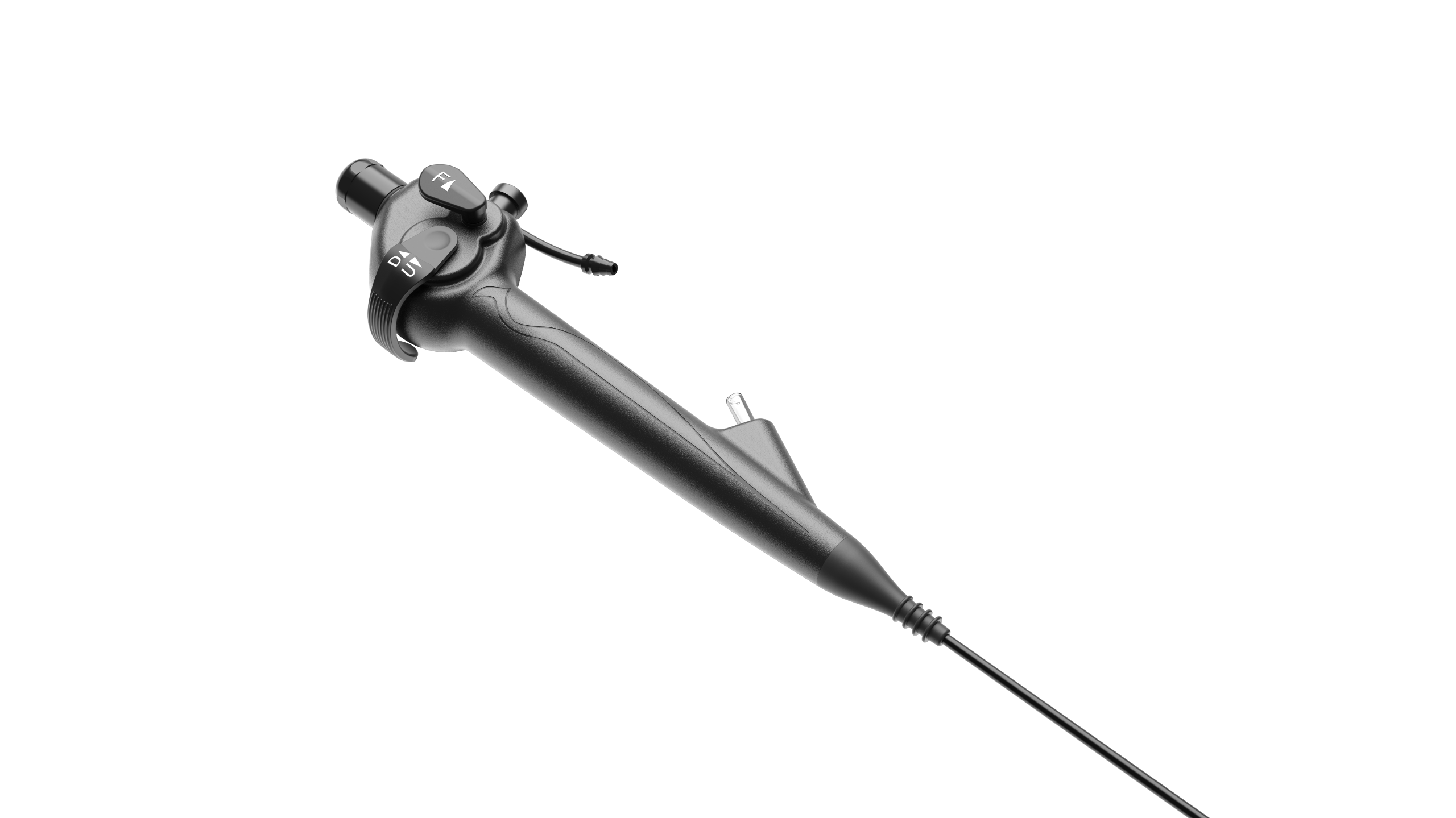
Axis II Clerix™ Coding & Reimbursement Hub
How to use this page
- Start here (Overview): quick orientation to physician-versus-facility coding for procedures using the Axis II Clerix™.
- Physician Coding tab: professional CPT® reporting logic, diagnosis coding, documentation language, and common pitfalls.
- Facility Coding tab: when C9761 applies, how it interacts with the new C8014, how C1747 and C1889 are reported by payer (Medicare vs. commercial) and site of service, when revenue code 0278 applies, and what documentation should support HOPD and ASC claims.
- Right-side "Additional Resources": Dornier and PRS tools, including CodeMatrix resources.
What the Axis II Clerix™ is
Axis II Clerix™ by Dornier MedTech is FDA-cleared as a suction-integrated ureteroscope and as a steerable ureteral catheter that establishes a conduit for irrigation and aspiration of kidney stones during ureteral lithotripsy. It supports in-scope suction workflows and may be used alone or together with the Dornier HOOVER FANS suction ureteral access sheath.
Physician vs. facility: the core coding rule
- Physicians: report the applicable CPT® ureteroscopy/lithotripsy code, commonly 52353 or 52356, based on the documented professional service. Physicians do not bill C9761.
- Facilities: HOPDs and ASCs may report C9761 when Clerix is used during ureteral lithotripsy and the documentation supports the full descriptor requirements.
- Used with HOOVER FANS: when Clerix is used alongside the HOOVER FANS suction access sheath, report C9761 only — C9761 and C8014 are both primary (status J1) and are never reported together on the same claim.
- Device reporting: C1747 describes the single-use urinary tract endoscope device. For Medicare, report C1747 (and C1889 when the HOOVER FANS suction sheath is also used) with your device charge amounts in the HOPD only; payment is packaged for 2026 ($0 on the device lines). Medicare does not require the device codes in the ASC. Commercial payers may require C1747 (and C1889 if a sheath is used) and the use of revenue code 0278 in both the ASC and HOPD — check with your payer.
- Documentation is the hinge: the operative note should identify the Axis II Clerix™ by name and state that a suction-integrated ureteroscope / steerable ureteral catheter with vacuum aspiration was used — not merely that "suction was used."
Q4 2026 Medicare operational takeaway (effective October 1, 2026)
- C9761 remains the facility pathway for qualifying Clerix cases in the HOPD or ASC. For Q4 2026 it is paid at approximately $9,672 (HOPD) and $6,612 (ASC, device-intensive) national average.
- The new C8014 (suction-enabled ureteral access sheath code) applies to sheath-only cases — a suction-integrated scope such as Clerix reports C9761 instead, including when the two devices are combined.
- For Medicare HOPD claims: report C1747 with your device charge amounts when a single-use suction-integrated ureteroscope is used. If HOOVER FANS is also used, add C1889 for the FANS suction sheath (C9761 + C1747 + C1889). Payment on the device lines is packaged ($0) for 2026, but hospital reporting supports future rate calculations.
- For Medicare ASC claims: C1747 and C1889 are not required. ASC payment is calculated as a percentage of the hospital APC, ASC device reporting does not factor into rate setting, and some MACs/payers may reject claims or require invoices when device pass-through codes are present.
- Commercial payers may require the device codes: C1747 (and C1889 if a sheath is used) with revenue code 0278 may be required in both the ASC and HOPD. Verify payer policy, contract language, claim edits, device reporting expectations, and prior authorization requirements before broad billing implementation.
Thank you & transparency
- Thank you to Dornier for supporting this hub and the development of reimbursement education tools.
- This content is developed and vetted by PRS and is not influenced by Dornier.
- This content does not guarantee coverage, payment, or payer acceptance. Always confirm payer-specific requirements and current-year rules.
Physician Coding (Axis II Clerix™)
Professional reporting for cases using the Axis II Clerix™ follows standard ureteroscopy and lithotripsy CPT® rules. The physician reports the CPT® procedure performed and supports facility coding by documenting the device and suction/vacuum aspiration workflow clearly.
Common professional CPT® codes
- 52353 – Cystourethroscopy, with ureteroscopy and/or pyeloscopy; with lithotripsy (ureteral catheterization is included).
- 52356 – Cystourethroscopy, with ureteroscopy and/or pyeloscopy; with lithotripsy including insertion of indwelling ureteral stent (e.g., Gibbons or double-J type).
Reporting the additional suction/aspiration work
- For the additional work associated with steerable vacuum aspiration, physicians may report the unlisted procedure code 53899 (unlisted procedure, urinary system; paid by report) or append modifier -22 to 52353/52356 to indicate work greater than typically required.
- A short description of the extra work performed should be added to Box 19 of the claim to assist proper processing. Be prepared to provide clinical documentation if requested by the payer.
Important physician rule
- C9761 is not a physician professional claim code. It is a facility procedure code used by HOPDs and ASCs when supported by documentation and payer policy.
- Physicians should code based on the actual work performed: ureteroscopy/pyeloscopy, lithotripsy, stent placement, ureteral catheterization, stone manipulation/removal, or other documented services.
Prior authorization practical point
- When authorization is required, make sure the professional authorization and facility authorization are aligned. The physician side may reference CPT® 52353 or 52356, while the facility side may require C9761.
Report diagnosis codes that reflect the reason for the encounter and code to the highest specificity supported by the medical record.
- N20.0 – Calculus of kidney
- N20.1 – Calculus of ureter
- N20.2 – Calculus of kidney with calculus of ureter
Additional diagnoses may be appropriate when supported by the record and relevant to medical necessity, operative complexity, payer policy, or patient risk.
Physician documentation should support the professional CPT® code and, when the facility reports C9761, should also support the facility's C-code logic.
What the operative note should state clearly
- Procedure performed: cystourethroscopy with ureteroscopy and/or pyeloscopy, lithotripsy, stent placement if performed, and laterality.
- Device identification: the Axis II Clerix™ suction-integrated ureteroscope, named exactly. If HOOVER FANS was also used, name it too — the combination still reports C9761 only at the facility level.
- Suction/vacuum aspiration: describe direct in-scope suction, irrigation/suction capability, and vacuum aspiration of stone fragments, dust, debris, or fluid.
- Steerability/catheter language: document that a steerable ureteral catheter / suction-integrated ureteroscope was used when the facility intends to support C9761.
- Stone burden and outcome: location, size/burden, fragmentation, evacuation/aspiration, residual burden, complications, and follow-up plan.
Suggested claim-support phrase:
Procedure performed using the Dornier Axis II Clerix suction-integrated single-use ureteroscope with lithotripsy, suction/irrigation capabilities, and steerable ureteral catheterization for vacuum aspiration of stone fragments and dust.
Modifier use
- Modifier -59 / -XS: may be required for distinct procedural services when payer rules allow. Do not report 52356 and 52353 on the same side simply by adding -59/-XS.
- Modifier -22: may be considered only when documentation supports substantially greater work than typical, with concrete detail such as increased operative time, difficult anatomy, unusually large stone burden, or extensive aspiration/evacuation work.
- Modifiers -LT / -RT / -50: use laterality and bilateral reporting according to payer-specific rules.
Global period awareness
- Most ureteroscopy stone procedures have a 0-day global period. Common exceptions include ESWL and PCNL procedures, which typically have 90-day globals.
Common physician-side pitfalls
- Generic language: "URS with suction" is too weak to support facility C9761 billing.
- Device omitted: failure to identify the Axis II Clerix™ by name weakens facility claim support.
- CPT/HCPCS role confusion: physicians report CPT® professional services; facilities report C-codes when applicable.
- Record mismatch: physician note, facility record, supply log, and charge capture must tell the same story.
Facility Coding (Axis II Clerix™)
The facility claim is where the Axis II Clerix™ becomes distinct. When Clerix is used during ureteral lithotripsy and the documentation supports the C9761 long descriptor, the HOPD or ASC may report C9761 for the facility procedure — including when Clerix is used together with the HOOVER FANS suction access sheath. C1747 describes the single-use urinary tract endoscope device and is not interchangeable with C9761.
The high-confidence rule: who bills what
- Physician / professional claim: report the applicable CPT® ureteroscopy/lithotripsy code, commonly 52353 or 52356. Physicians do not bill C9761.
- Facility (HOPD or ASC): report C9761 when all required elements are met and documented.
- Clerix + HOOVER FANS in the same case: report procedure code C9761 only. C9761 and C8014 are both status J1 (primary/comprehensive) and cannot be reported together on the same claim. In the HOPD, report both device codes with C9761: C1747 for the Clerix scope and C1889 for the FANS suction sheath.
- Device codes in the HOPD: for Medicare HOPD claims, report C1747 with your device charge amount for the Clerix device; add C1889 for the FANS sheath when HOOVER FANS is also used. C9761 is a device-intensive code, so the device code(s) must be reported; payment on the device lines is packaged for 2026 ($0).
- Medicare ASC claims: C1747 and C1889 are not required.
- Commercial payers (ASC and HOPD): the payer may require C1747 (and C1889 if a sheath is also used) and the use of revenue code 0278 — check with your payer for specific instructions.
Device code reporting by payer and site of service (C1747 / C1889)
| Site of Service | Medicare | Commercial |
|---|---|---|
| HOPD | Report C1747 (and C1889 if a sheath is also used) with your device charge amounts; payment is packaged, paid $0.* | Payer may require C1747 (single-use scope), C1889 if a sheath is also used, and the use of revenue code 0278.* |
| ASC | C1747 / C1889 not required.* | Payer may require C1747 (single-use scope), C1889 if a sheath is also used, and the use of revenue code 0278.* |
*PLEASE NOTE: Clerix is a single-use scope and is reported with C1747. If the physician also uses a suction-enabled ureteral access sheath (e.g., Hoover Fans), report the sheath with C1889. For Medicare in the HOPD, C1747 and C1889 (descriptions below) are packaged for 2026 — no separate payment is made, but continue to report them with your device charge amounts to support future rate calculations. Medicare does not require these codes in the ASC. Commercial payers may require these device codes and the use of revenue code 0278 in both the ASC and HOPD — check with your payer for specific instructions.
C9761 descriptor
C9761 – Cystourethroscopy, with ureteroscopy and/or pyeloscopy, with lithotripsy, and ureteral catheterization for steerable vacuum aspiration of the kidney, collecting system, ureter, bladder, and urethra if necessary, with use of steerable ureteral catheter or suction-integrated ureteroscope.
When C9761 is supported for Axis II Clerix™
- Services were provided in the HOPD or ASC.
- The Axis II Clerix™ suction-integrated ureteroscope was used, and the documentation identifies it by name.
- Either 52353 or 52356 work was performed.
- The physician documented that a suction-integrated ureteroscope / steerable ureteral catheter with vacuum aspiration was used to perform the procedure.
Related codes for context
- C8014 – Cystourethroscopy, with ureteroscopy and/or pyeloscopy; with lithotripsy, including use of a suction enabled ureteral access sheath, with irrigation (if performed). Applies to sheath-only cases (e.g., HOOVER FANS with a standard scope) — not to Clerix cases.
- C1747 – Endoscope, single-use (i.e. disposable), urinary tract, imaging/illumination device (insertable). The device code for the single-use scope; packaged payment.
- C1889 – Implantable/insertable device, not otherwise classified. The device code for the single-use HOOVER FANS suction sheath, reported by the HOPD when FANS is used with Clerix; packaged payment.
Site of Service: What Drives Facility Payment (Q4 2026, national averages)
- HOPD: C9761 is status J1 (comprehensive), approx. $9,672. All covered Part B services on the claim are packaged with the primary service.
- ASC: C9761 is device-intensive (payment indicator J8), approx. $6,612.
- Comparison: traditional lithotripsy (52353/52356) pays approx. $5,478 HOPD / $2,730 ASC; the sheath-only code C8014 pays approx. $5,478 HOPD / $3,452 ASC.
Charge Capture Tips: Common Misses That Trigger Denials
- Reporting C9761 and C8014 together: never — the scope code (C9761) is the only reportable procedure when both devices are used.
- Device codes on Medicare ASC claims: not required; may trigger rejections or invoice requests — remove per payer instruction. Commercial payers may still require them with revenue code 0278, so follow payer-specific instructions.
- Missing device codes on Medicare HOPD claims: report C1747 with your device charge amount (and C1889 when HOOVER FANS is also used) to satisfy the device-intensive requirement and support future rate calculations.
- Wrong or missing revenue code on commercial claims: when the payer requires the device codes, revenue code 0278 is the recommended revenue code for these device C-codes in both the ASC and HOPD, unless plan policy directs otherwise.
- Generic suction language: the record must name the Clerix and describe steerable vacuum aspiration.
ASC and HOPD outpatient diagnosis reporting: report ICD-10-CM codes that reflect the reason for the encounter/surgery and code to the highest level of specificity supported by the record.
- N20.0 – Calculus of kidney
- N20.1 – Calculus of ureter
- N20.2 – Calculus of kidney with calculus of ureter
For outpatient surgery, first-list the diagnosis that best explains the encounter. Do not code probable, suspected, or rule-out diagnoses unless payer rules and official guidance allow.
Documentation checklist: what must be present to support C9761
- Cystourethroscopy with ureteroscopy and/or pyeloscopy was performed.
- Lithotripsy was performed.
- A suction-integrated ureteroscope / steerable ureteral catheter with vacuum aspiration was used.
- The record identifies the device by name: Axis II Clerix™.
- The record describes aspiration/evacuation of stone fragments, dust, debris, or fluid from the kidney/collecting system as applicable.
- If HOOVER FANS was also used, it is named in the record — but the facility claim still reports C9761 only.
Claim remarks / internal billing note
Consider including this wording in Box 19 of the CMS-1500, FL 80 of the UB-04, or the internal billing note when supported by documentation and payer process:
Procedure performed using the Dornier Axis II Clerix suction-integrated single-use ureteroscope with lithotripsy, suction/irrigation capabilities, and steerable ureteral catheterization for vacuum aspiration.
Record alignment
- Physician operative note, nursing documentation, supply log, device record, charge capture, and claim lines should all identify the same procedure and device story.
- Do not let the facility claim look like a C9761 procedure if the op note reads like ordinary URS with generic suction.
Payment and site-of-service considerations
- Device codes in the HOPD (Medicare): report C1747 with your device charge amount for the Clerix device; when HOOVER FANS is also used, report C1889 for the single-use FANS suction sheath as well. C8014 and C9761 are device-intensive codes, which is why the device codes are reported. The device lines are packaged for 2026 and pay $0, but hospital reporting is factored into cost allocation for the following year and supports future rate calculations.
- Device codes in the ASC (Medicare): C1747 and C1889 are not required on Medicare ASC claims. ASC payment is calculated as a percentage of the hospital APC and ASC device reporting does not factor into rate setting; some MACs/payers may reject the claim or require an invoice when device pass-through codes are present.
- Commercial payers (ASC and HOPD): the payer may require C1747 (and C1889 if a sheath is also used) and the use of revenue code 0278 in both settings — check with your payer for specific instructions.
- C9761 payment status: C9761 remains at its assigned APC (5376) for Q4 2026 (status J1 in the HOPD; device-intensive J8 in the ASC).
- Payer variation: commercial and Medicare Advantage plans may apply different edits, authorization rules, device-code expectations, or invoice requirements.
Facility denial workflow
- Step 1: review the denial reason and confirm whether the claim, authorization, place of service, and documentation support the billed pathway.
- Step 2: correct what can be corrected. Confirm correct POS/site of service, Axis II Clerix™ use documented by name, physician code 52353 or 52356, and documentation of a suction-integrated ureteroscope / steerable catheter with vacuum aspiration.
- Step 3: check Box 19 or UB-04 FL 80 remarks for the Clerix wording when appropriate; correct and appeal if needed.
- Second denial: contact PRS using the denial support process.
Common facility-side pitfalls
- Billing C9761 without the full descriptor: suction alone is not enough.
- Missing device identity: claim implies a suction-integrated scope but the record does not name the Axis II Clerix™.
- C9761/C1747 substitution error: treating the procedure code and device code as alternatives rather than distinct claim elements, or reporting C1747 on Medicare ASC claims when Medicare does not require it in the ASC (commercial payers may — follow payer instructions).
- Reporting C8014 alongside C9761: when Clerix and HOOVER FANS are used together, only C9761 is reported.
- Record mismatch: physician note, nursing documentation, supply log, chargemaster, and claim lines do not align.

Join Our Free Trial
Get started today before this once in a lifetime opportunity expires.